
Quitman County Criminal Court Cases
Superior Court has general jurisdiction and exclusive felony-trial jurisdiction in Georgia. Quitman County sits in the Pataula Judicial Circuit, so the Superior Court clerk is the key custodian for indictments, accusations, docket sheets, pleas, dispositions, sentences, and certified copies. Magistrate Court approves and signs warrants and handles early or limited proceedings. Probate Court lists traffic court among its local duties. No separate State Court or Georgetown municipal court was identified in the official research.
The court level matters. An officer's arrest charge may change before a prosecutor files an accusation or presents an indictment. A clerk search therefore answers a different question from a sheriff report or GCIC history. Ask for the case number, filing date, charging document, docket, final disposition, and sentence. The official local court contact is P.O. Box 7, Georgetown, GA 39854, at 229-334-2224. Confirm the right counter and current access terms before travel.
Quitman County Felony Case Files
The Clerk of Superior Court is the first stop after a felony case is filed. A warrant at Magistrate Court does not replace the later Superior Court case file, and GCIC does not serve as the custodian of local pleadings. The official Superior Court clerk page identifies the office that keeps these records.
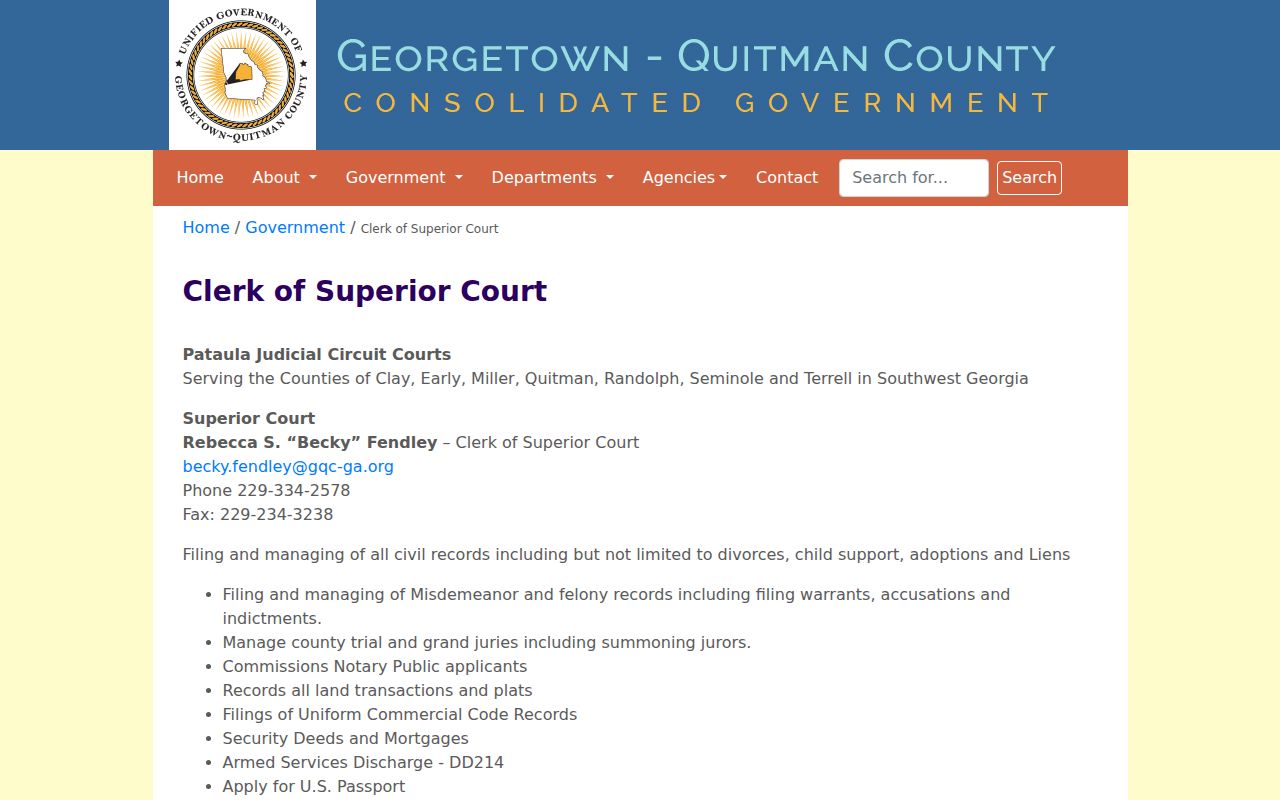
Superior Court Clerk
Quitman County Courthouse
Georgetown, Georgia
Use the current unified-government directory for the physical counter, mailing instructions, copy charges, and certification terms.
Probate and Magistrate Court
P.O. Box 7
Georgetown, GA 39854
229-334-2224
Email: quit.judge@gqc-ga.org
Searching Quitman County Case Records
Quitman County has no confirmed complete, free trial-court name index. Search in layers and keep the defendant's full legal spelling, approximate year, and case number ready. PeachCourt may expose filings or documents for participating courts, but an account and document charges may apply. Its use for mandatory filing does not prove that every historic criminal file is visible to an anonymous user.
- Identify the court from the charge and stage. Start felony filings with Superior Court and warrant or first-stage matters with Magistrate Court.
- Ask whether the case is available through PeachCourt. Search by case number when known, then use the name and filing year to narrow a broader inquiry.
- Open the docket and compare its court, filing date, party, charge, and status. Do not rely on a matching name alone.
- Request the charging paper, disposition, and sentence from the clerk. Ask whether an electronic, paper, or certified copy best fits the need.
- For an older or missing file, request a clerk search by mail or at the counter and confirm costs before ordering a large set.
| Search detail | Use | Limit |
|---|---|---|
| Case number | Best exact court identifier | Must match the right court |
| Full party name | Finds possible case matches | Common names need added checks |
| Filing year | Narrows the docket range | Arrest year may differ |
| Case type or status | Separates criminal results | Live labels vary by system |
| Docket event | Shows procedural movement | Entry text may not include the filed image |
PeachCourt for Quitman County Cases
Georgia Courts lists Quitman Superior Court as a mandatory electronic-filing court. That finding establishes how attorneys and courts submit records, but it does not establish a free, complete public archive. The Georgia judiciary's e-filing list documents Quitman's status.
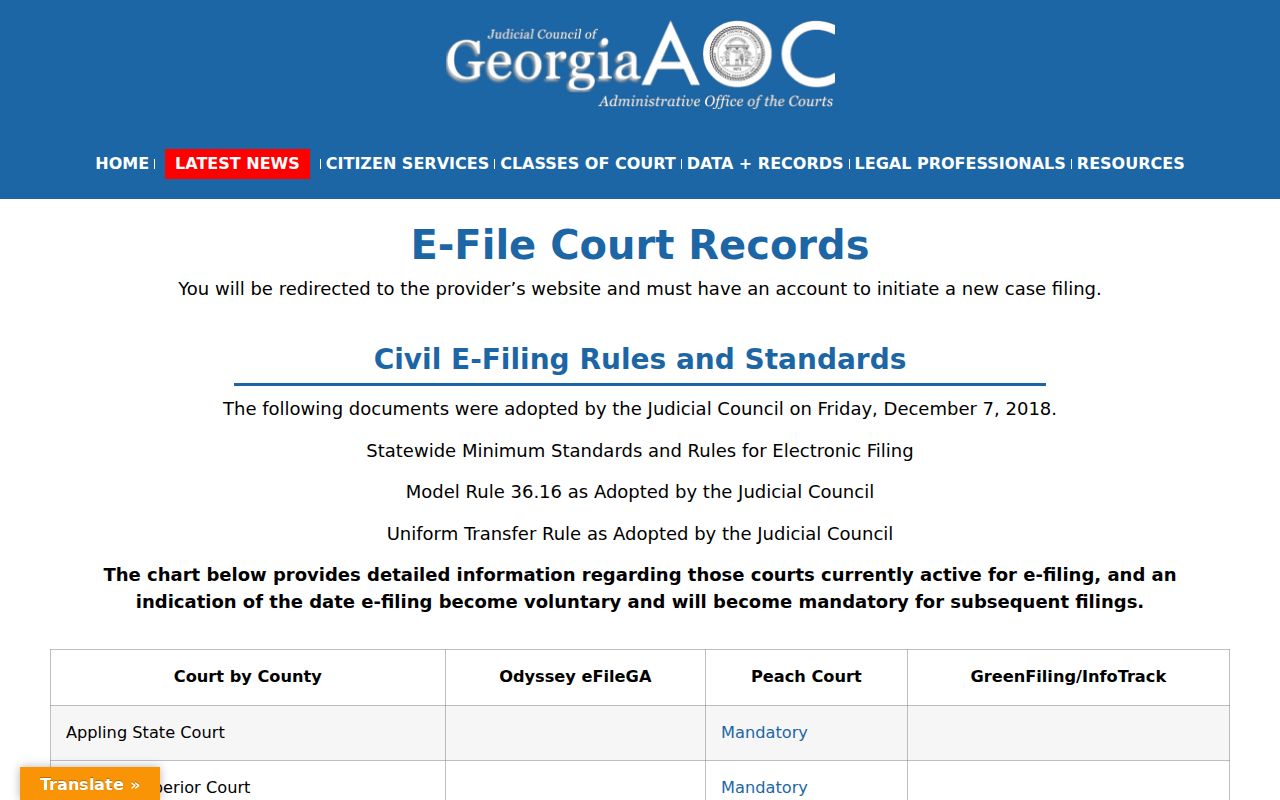
The PeachCourt portal is the named filing and document channel used by many Georgia superior courts.
Inside a Quitman County Case File
A criminal case file is case-centered. It tracks what the State filed and what the court did, unlike a person-centered GCIC history. Review each field together because a charge description without the final disposition can give a false picture. Images may also be redacted or unavailable online even when a public docket entry exists.
| Case Number and Court | Identifies the exact proceeding and the clerk responsible for it. |
|---|---|
| Charging Document | The complaint, accusation, or indictment states the charge pursued in court. |
| Docket Entries | Dated filings, returns, motions, notices, hearings, and court orders. |
| Hearing Dates | Calendar events such as arraignment, motion hearings, plea, or trial. |
| Disposition and Judgment | Dismissal, nolle prosequi, acquittal, plea, or judgment of guilt. |
| Sentence and Conditions | Custody, probation, fines, costs, restitution, and concurrent or consecutive terms. |
Useful terms deserve care. A nolle prosequi means the prosecutor formally declined further prosecution. A disposition is the case outcome. An accusation is a prosecutor's charging instrument for eligible cases, while an indictment is a grand jury's true bill. Neither a docket entry nor an arrest line should be read apart from the signed judgment when finality matters.
Quitman County Criminal Court Roles
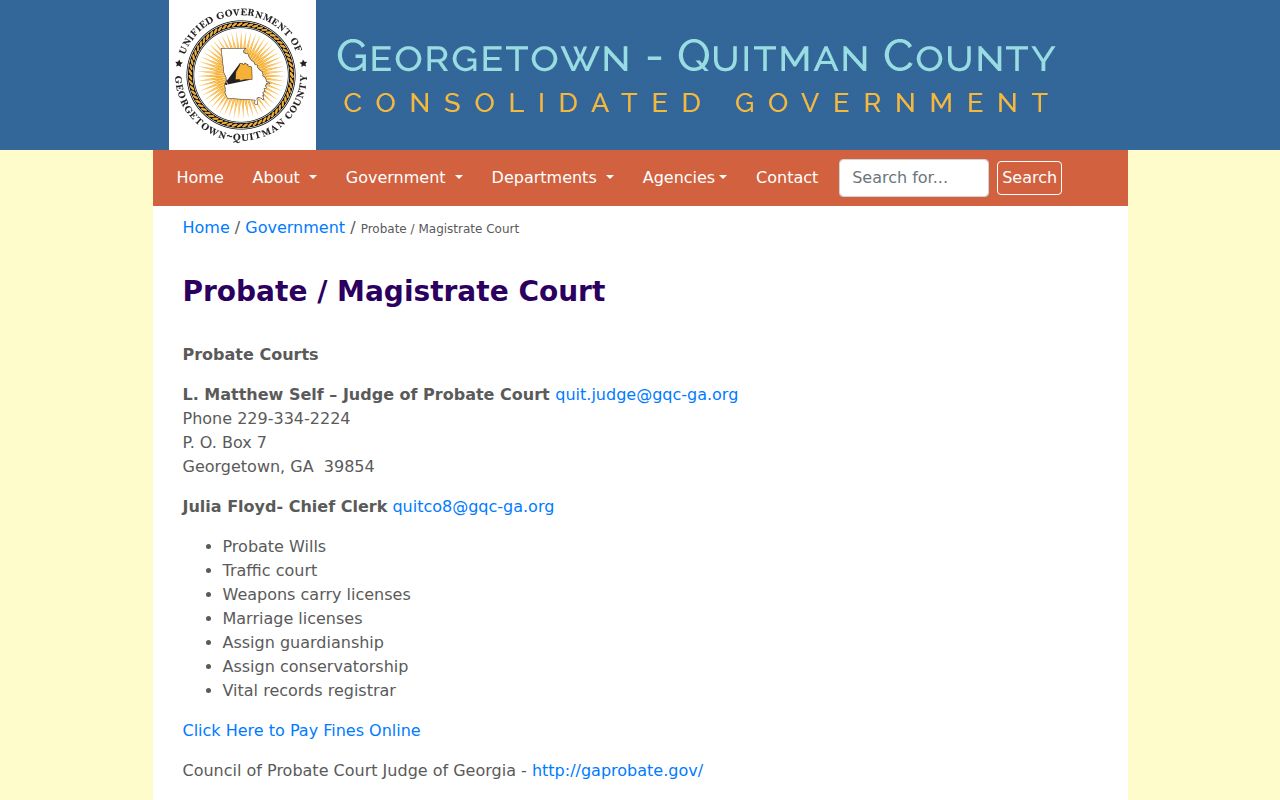
The local Probate and Magistrate page is more than a directory. It confirms the combined judge structure, traffic role, warrant authority, and selected filing fees. The official court page is the source for those duties.
| Record sought | Likely custodian | Practical request |
|---|---|---|
| Felony indictment or sentence | Superior Court clerk | Ask for docket, filed image, disposition, and certification |
| Warrant or early proceeding | Magistrate Court | Give date, subject, and any warrant or event number |
| Traffic matter | Probate Court | Confirm whether the payment tool or clerk holds the needed record |
| Arrest report | Arresting agency | Request the agency record, not the court file |
How a Criminal Case Moves
Cases do not always follow the same pace, and an emergency order can toll deadlines without erasing a case. In broad form, the arresting agency supplies the first allegation, Magistrate Court handles early judicial work, the prosecutor decides the filed charge, and Superior Court records the felony proceeding. Pleas, motions, continuances, and trial choices affect the path.
Case flow: Charges Filed › Arraignment › Pretrial › Plea or Trial › Disposition › Sentencing
A gap between arrest and filing is not proof that the matter vanished. Compare the arresting-agency report, Magistrate record, and Superior Court docket. For the full transition from booking to prosecution, the county arrest lookup explains the separate sheriff and agency channels.
Reading Quitman County Case Dispositions
The arrest charge may be amended, declined, accused, indicted, dismissed, or adjudicated. The final signed disposition is therefore the key document for self-review or correction of a state history. If GCIC lacks an outcome that the court entered, obtain certified proof from the originating clerk. GCIC says it cannot change another contributor's data without documentation or authorization.
- No-bill
- The grand jury declined to return an indictment.
- Dismissal
- The charge ended without a conviction.
- Acquittal
- The court or jury returned a not-guilty outcome.
- First-offender treatment
- A Georgia statutory disposition that may avoid adjudication after successful completion.
- Record restriction
- A limit on eligible GCIC disclosure, not automatic destruction of every court document.
Federal Cases From Quitman County
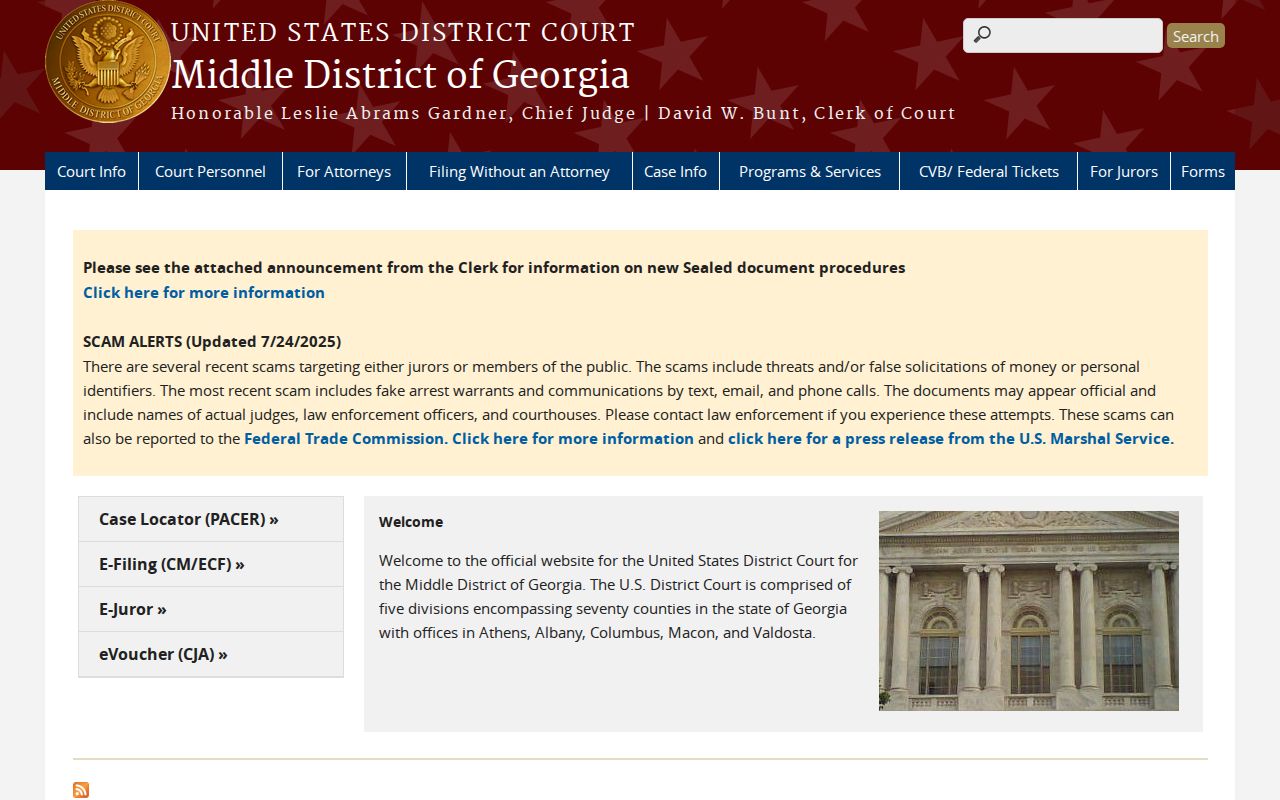
Quitman County is within the U.S. District Court for the Middle District of Georgia. Federal criminal records do not appear merely because a user searches a county clerk or PeachCourt. The Middle District's official site identifies the federal court layer.
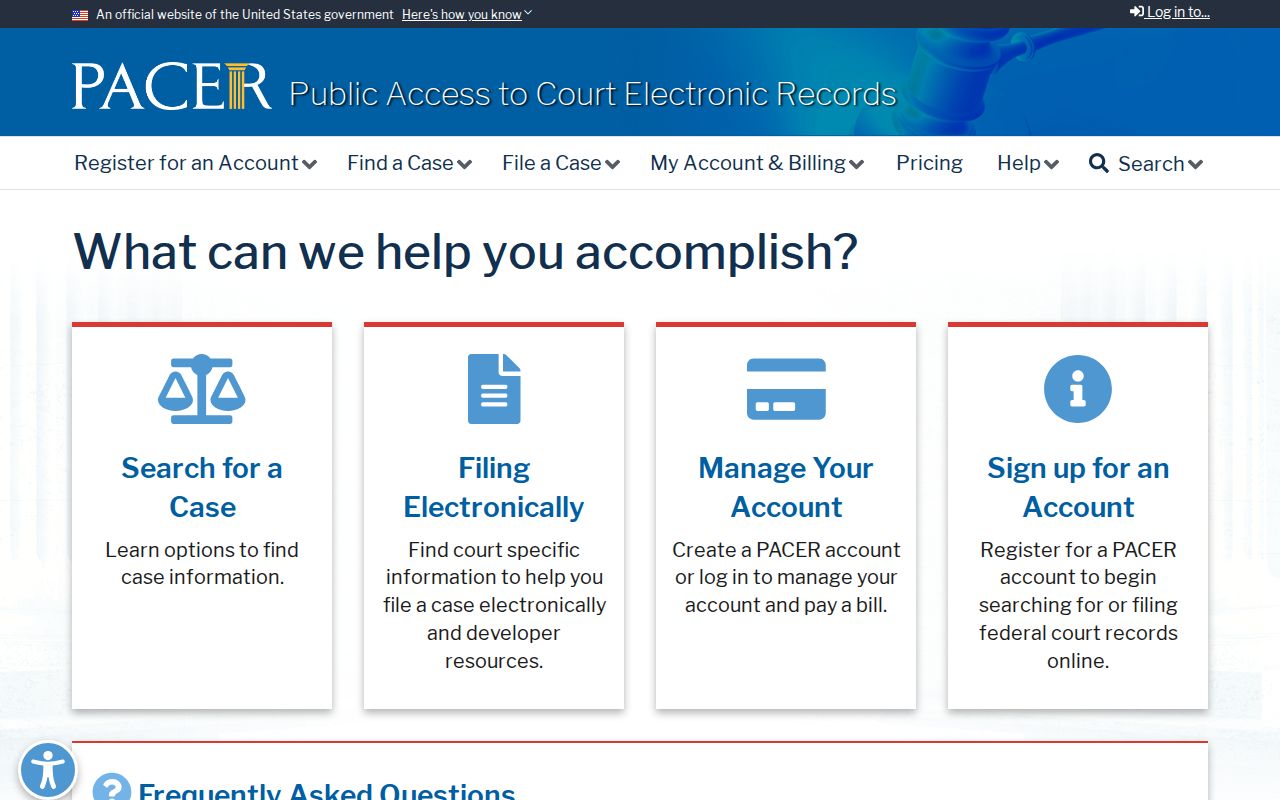
Federal docket and document access runs through PACER, with registration, usage fees, and the current quarterly low-usage waiver terms.
Case Record Access & Restrictions
Georgia court access begins with a presumption of public records, but that does not mean all details are instantly online. Juvenile material, sealed filings, protected identifiers, victim-sensitive facts, and records affected by an active sealing order can be limited. An online view may redact more than the clerk's controlled record or may show a docket line without the image. Ask the clerk whether inspection is available and which legal rule controls any withheld part.
The Georgia Open Records Act applies to agency records subject to exemptions, while court files also operate under court-access rules and clerk duties. A written request should identify the exact case and document. Ask for segregable public portions if part is protected. For old or unscanned Quitman County cases, request an archive search and a cost estimate. Record restriction under O.C.G.A. §35-3-37 and court sealing are separate steps, so a restricted GCIC event may still require a distinct court order before eligible court material is sealed.