
Quitman County Arrest History
The Quitman County Sheriff handles all local police functions under the Georgetown–Quitman consolidated government. There is no separate Georgetown police records desk. Georgia State Patrol may create a report for a state traffic arrest, GBI keeps records from its own investigations, and DNR Law Enforcement may hold the agency report for boating, hunting, or conservation action around Lake Walter F. George. The sheriff can still hold booking or custody information when another agency made the arrest.
An arrest history can include agency reports and booking events across time. It is not the same as a conviction history. A booking captures intake facts and the charge asserted then. The prosecutor may amend or decline that charge, and a court may later dismiss it, acquit the accused, accept a plea, or enter judgment. Verify the outcome in the filed Quitman County court record.
No Quitman Booking Log Exists
No official Quitman County jail roster, booking log, detention-capacity page, visitation portal, or sheriff app was located. Do not fill that gap with a Brooks County or commercial mugshot site. The official fallback is a phone inquiry to the sheriff, followed by a focused written request for the booking sheet and arrest report. The sheriff's own site identifies 121 Main Street, P.O. Box 338, Georgetown, GA 39854, telephone 229-334-3726, and fax 229-334-0905. Confirm those details before a time-sensitive request.
Quitman County Sheriff
121 Main Street
P.O. Box 338
Georgetown, GA 39854
229-334-3726
Ask first about present custody, transfer status, and the process for separate booking and arrest documents.
A person may be held outside Quitman County under a current detention arrangement. Ask where the person is physically held, which office maintains the booking file, and whether a transfer occurred. The historic old jail on Main Street is not a verified active detention site and must not be used for inmate mail or visit plans.
Looking Up Quitman County Arrests
Use a channel-complete search because no single official screen covers the whole path. Keep the full name, date of birth if lawfully available, approximate arrest date, event location, and agency or incident number ready. Start with the narrowest request and ask for a cost estimate if documents are extensive.
- Confirm the place is Quitman County and Georgetown, not the City of Quitman in Brooks County. Call the sheriff to ask about present custody or transfer.
- Ask the sheriff or actual arresting agency for the booking sheet and arrest report as separate records. Give the date, place, and event number when known.
- Check Magistrate Court for a warrant or early proceeding, then Superior Court for any accusation, indictment, disposition, or sentence.
- Use GCIC's official self-review route for a fingerprint-supported Georgia history. Georgia Felon Search is narrower and shows qualifying felony convictions, not all arrests.
- Submit a written Georgia Open Records Act request when routine phone access is not enough. Identify each record component and request electronic delivery.
- Use GDC only after a state sentence or transfer. Check BOP for federal custody and VINELink where Georgia custody notifications are available.
Quitman Warrants Need Direct Checks
No public Quitman warrant search was found. Georgia's official warrant guidance directs readers to local law enforcement, jail, or courthouse contacts.
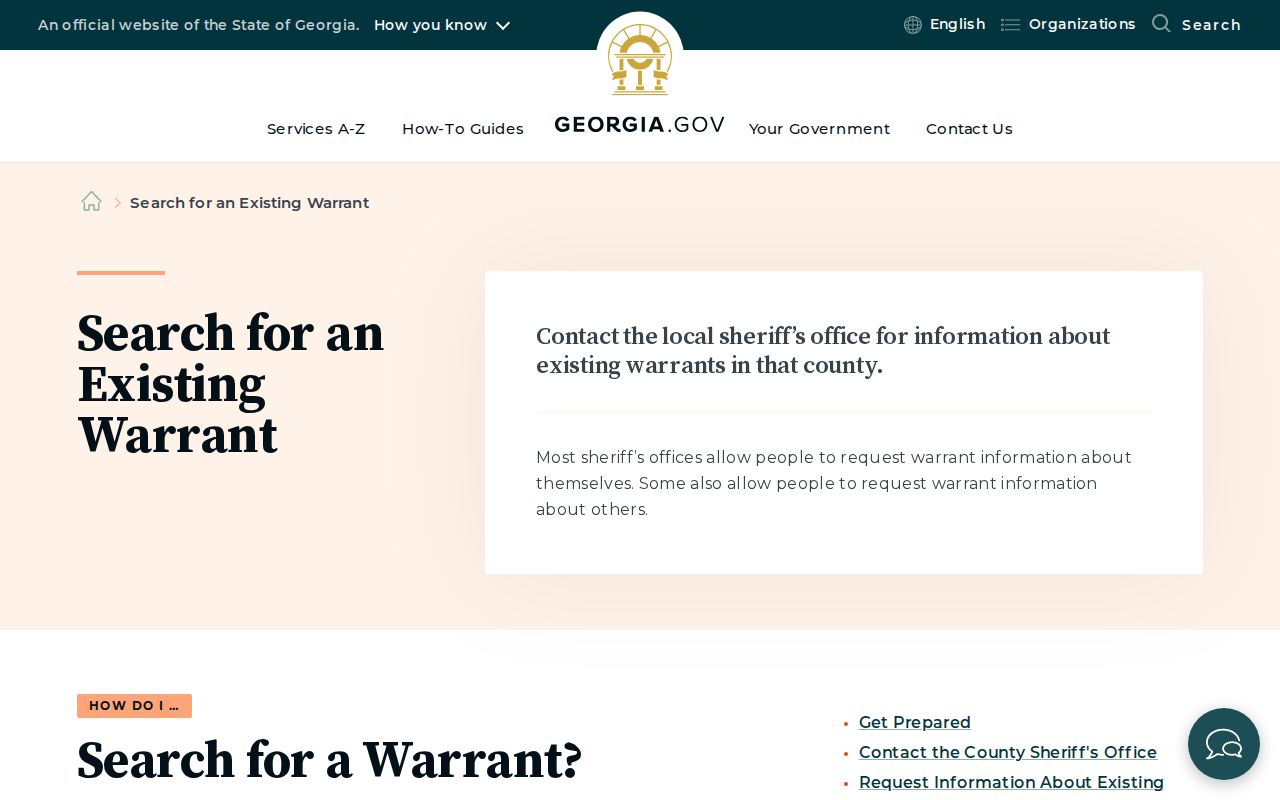
Quitman Magistrate Court says it approves and signs warrants. Its published line is 229-334-2224, with mail to P.O. Box 7, Georgetown, GA 39854. Bench warrants may remain tied to a court file, while arrest warrants are executed by law enforcement. Search warrants can remain nonpublic during an investigation. Never send money because an unsolicited caller threatens arrest. Call a published office number independently.
Inside a Quitman County Arrest Record
The agency report and booking sheet overlap, but they are not identical. Request both when the purpose is to understand the event and intake. Some fields can be withheld or redacted because they identify a victim, juvenile, protected personal detail, medical fact, or active investigative step.
| Event or Report Number | Identifies the arresting agency's incident file. |
|---|---|
| Arrest Date and Place | Shows when and where custody began. |
| Arresting Agency | Identifies who created the report and should receive the report request. |
| Booking Number and Time | Tracks custodial intake and the booking custodian. |
| Charge and Authority | Lists the alleged offense and warrant or warrantless basis at that stage. |
| Bond and First Appearance | Shows early release terms and judicial processing when recorded. |
| Photograph and Fingerprints | May be created at intake; release remains subject to Georgia law and redaction rules. |
| Release or Transfer | Records release, movement to another jail, or later state custody. |
The arrest charge is not necessarily the filed charge. Compare the report with the clerk's accusation or indictment and signed disposition. The Offender Tracking Number, or OTN, can tie an arrest cycle to later reports. A State Identification number, or SID, identifies the person within Georgia's criminal-history system.
Route Quitman Arrest Reports Correctly
Request the investigative report from its creator even when the sheriff booked the person. This is especially important in a county shaped by state highways, the Chattahoochee River, and Lake Walter F. George. The sheriff covers local calls, but state agencies keep their own event narratives and evidence records.
| Arresting agency | Request route | Likely coverage |
|---|---|---|
| Quitman County Sheriff | Official sheriff or unified-government open-records route | Local policing, booking, and warrant custody |
| Georgia State Patrol | Georgia Department of Public Safety records channel | State traffic, crash, and related arrest reports |
| Georgia Bureau of Investigation | GBI open-records contact | GBI-led investigations, not routine local calls |
| DNR Law Enforcement | Georgia DNR records channel | Lake, boating, hunting, and conservation enforcement |
A sheriff booking entry does not transfer ownership of a GSP, GBI, or DNR investigative file. Ask each custodian only for the part it created. Then use Magistrate or Superior Court to see whether the allegation became a filed case.
Booking Logs and Recent Arrests
Because Quitman County publishes no verified roster, absence from an online list proves nothing. A recent detainee may be housed elsewhere, released, or moved before a web query elsewhere updates. Call the sheriff and ask whether the person is currently held, was booked, or was transferred. Request a booking document if a durable record is needed.
A county inquiry also has a short time horizon. It answers present or recent custody, not every prior event. GDC begins to matter after a state sentence or transfer, not at a new local booking. VINELink may provide supported custody notifications, but it does not replace the sheriff record or the court's disposition. Avoid unofficial galleries, republished photographs, and copied name lists.
GDC Does Not Show New Bookings
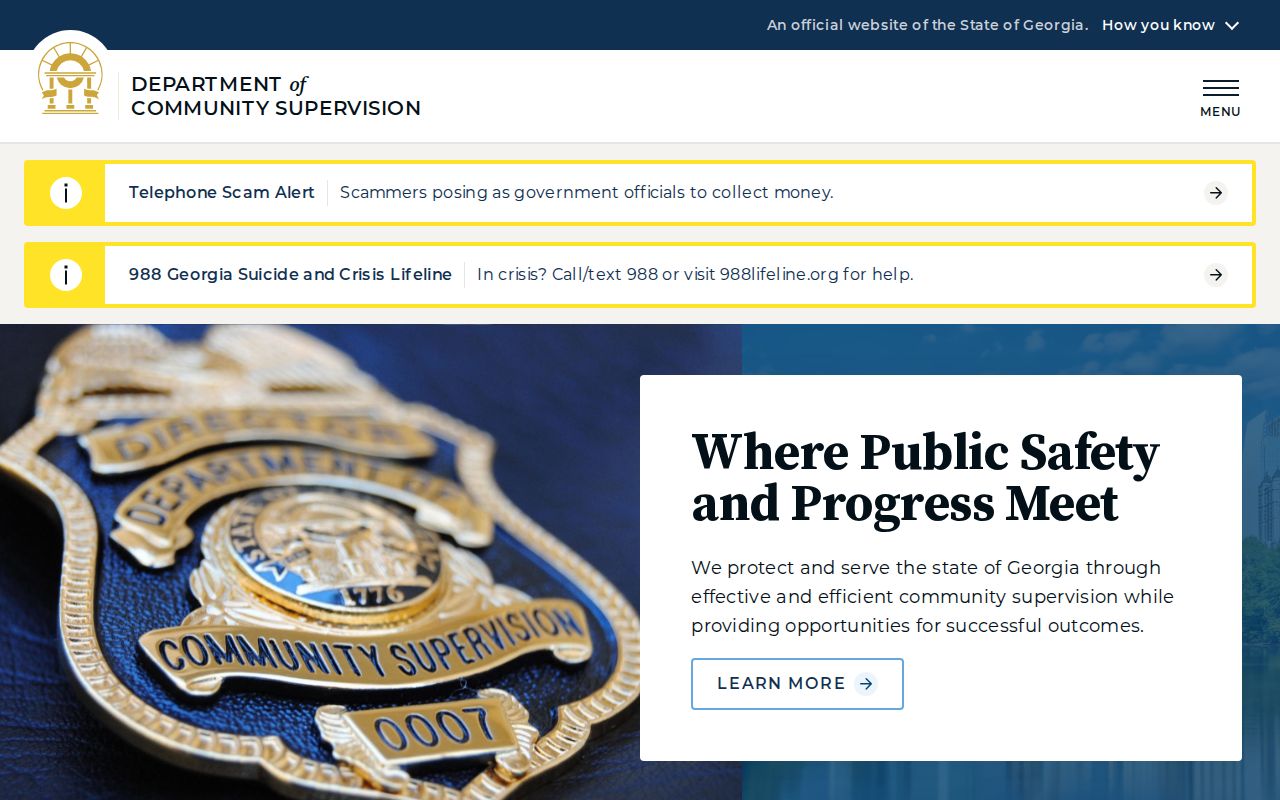
The Georgia Department of Community Supervision supervises felony probation and parole in the community.
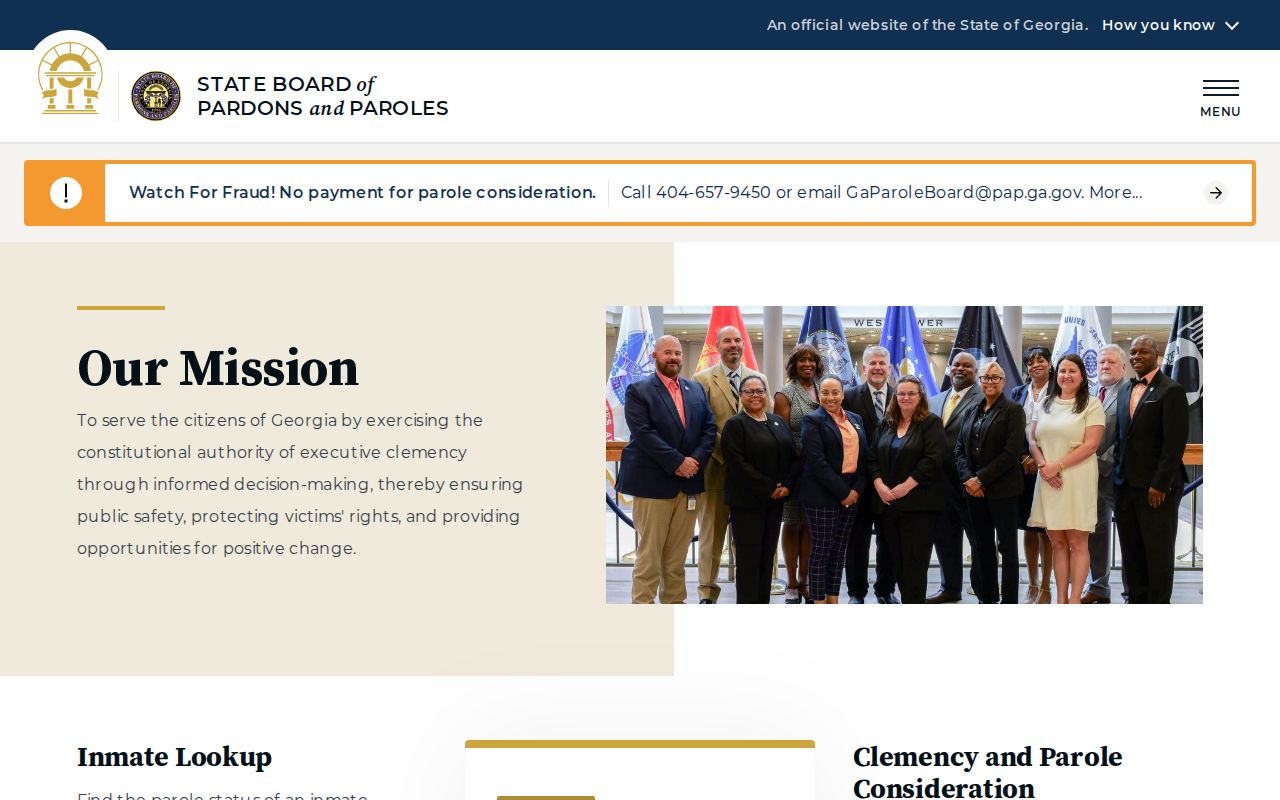
The Georgia State Board of Pardons and Paroles is the separate parole authority.
For sentenced state custody, GDC Find an Offender can be searched by GDC ID, case number, name, and optional demographic filters. A person can disappear from a local inquiry after transfer to GDC without being released. The reverse is also true: a new pretrial detainee may not appear in GDC at all.
Quitman Arrest Requests Take Time
The Georgia Open Records Act supplies the main fallback when no database exists. A written request should identify the record type, date range, event location, incident or booking number, and the specific components sought. Ask for electronic delivery and a cost estimate. The agency generally must respond within three business days when records are available, but that is a response duty, not a promise that archived reports, audio, or video will be produced within three days.
Ask for segregable public portions if part of a file is exempt. Juvenile material, victim-sensitive information, protected identifiers, and records whose release could interfere with an active investigation may be limited. A narrow request often makes the custodian's task clearer. Do not attach sensitive identification unless the agency says it is required for the specific record product.
Read Quitman Arrest Counts Cautiously
The GBI crime-statistics program describes Georgia's official UCR reporting channel.
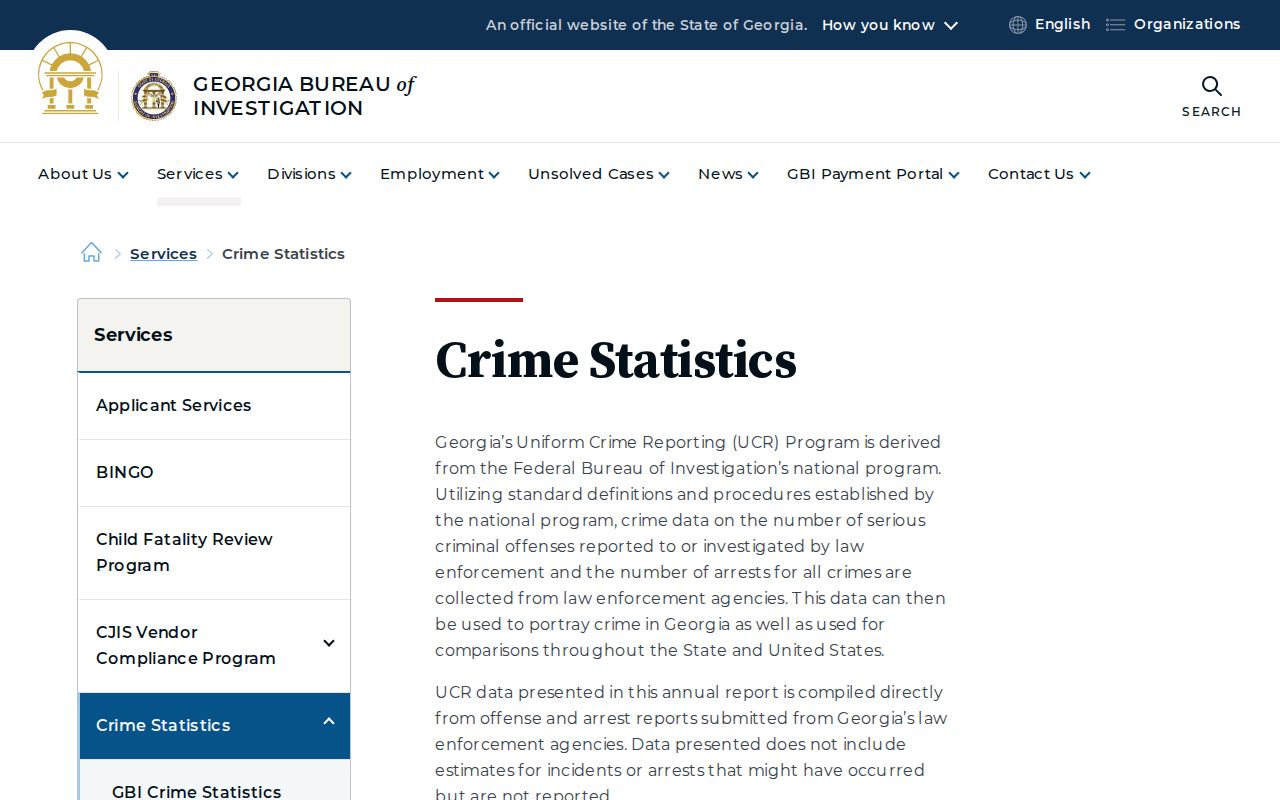
Annual figures compile offense and arrest reports submitted under national standards and do not estimate events that were never reported. Georgetown has no separate municipal police department, so a supposed Georgetown PD series is a warning sign. Use the actual Quitman reporting agency and year. Small raw counts can produce large rate changes, and a missing reporting period should never be silently treated as zero.
Arrests Are Not Convictions
An arrest record proves that an agency reported taking someone into custody under alleged legal authority. It does not prove guilt. A conviction requires a court judgment after a plea or adjudication. Different custodians, dates, and record systems explain why the arrest line and court outcome may not match at first glance.
| Point | Arrest record | Conviction record |
|---|---|---|
| Created by | Arresting agency and booking custodian | Court, then reported to state systems |
| Shows | Alleged charge and custodial intake | Filed case outcome and judgment |
| Found through | Sheriff, arresting agency, written request | Court clerk and qualifying state repository channels |
| Possible ending | Release, no filing, dismissal, or later prosecution | Guilty judgment, acquittal, dismissal, or other disposition |
Note: An arrest is not proof of guilt, and some bookings never produce charges or end without a conviction.
For the filed charge, docket, and final judgment, use the separate Quitman County criminal court cases route. If a Georgia state entry remains wrong after the court decides the case, collect a certified disposition and follow GCIC's correction process.
Federal Custody Uses BOP
The Federal Bureau of Prisons inmate locator covers federal custody, not Quitman County detention.
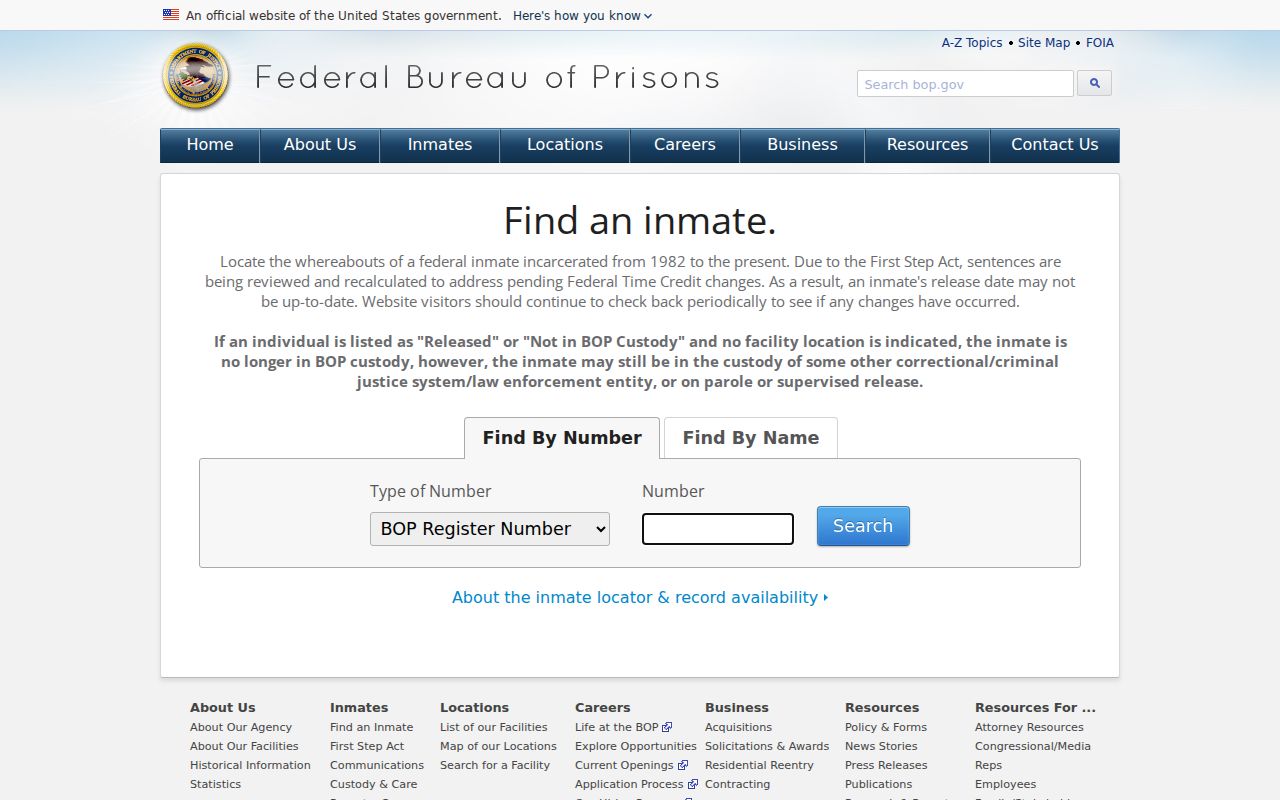
A federal arrest can lead to a Middle District of Georgia case and a federal custody path. PACER supplies the federal docket. BOP supplies federal inmate location after the person enters its covered system. Neither source should be used to infer that a missing Quitman County booking never occurred.